

There is a rule in American fashion that says you should not wear white after Labor Day. Like most fashion rules, it is outdated, classist in origin, and completely wrong. White, off-white, cream, and ivory are four of the most flattering, versatile, and universally beautiful colors in fashion. They work in every season, for every skin tone, in every setting. And the idea that a color this powerful has an expiration date is one of the most persistent bad ideas in style history.
Here is the real guide to wearing white: not when to wear it, because the answer is always, but how to wear it in every season and for every occasion.
Why White Works Year-Round
White is not a summer color. It is a neutral. The same way black, beige, and gray work in every month, white works in every month. The difference is texture. A white linen dress in July feels summery because linen is a summer fabric. A white wool coat in January feels wintery because wool is a winter fabric. The color is the same. The fabric creates the season.
White also photographs better than almost any other color in every type of lighting. In natural sunlight, it glows. In candlelight, it softens into warm cream. In indoor lighting, it stays clean and bright. This is why photographers prefer white: it reflects light rather than absorbing it, which means the wearer’s face is always illuminated rather than cast in shadow. A white dress is a built-in lighting upgrade for every photo.
How to Wear White in Summer
Summer is where white truly shines, because the fabrics that define summer dressing are the same fabrics that make white look its best. Linen in off-white has a natural, relaxed texture that avoids the “too pristine” look. Cotton in cream feels soft and lived-in. Viscose in ivory drapes with a subtle sheen that catches sunlight. In summer, the key to wearing white well is choosing fabrics with texture rather than fabrics with a flat, uniform surface. A white dress in textured linen feels intentional. A white dress in shiny polyester feels like a Halloween costume.
The other summer trick is tonal dressing: wearing different shades of white together. A cream knit tank with off-white linen pants and ivory sandals creates a monochromatic look that reads as elevated and editorial. The slight variation between the shades prevents the outfit from looking like a uniform and adds visual depth that a single shade of white cannot achieve.
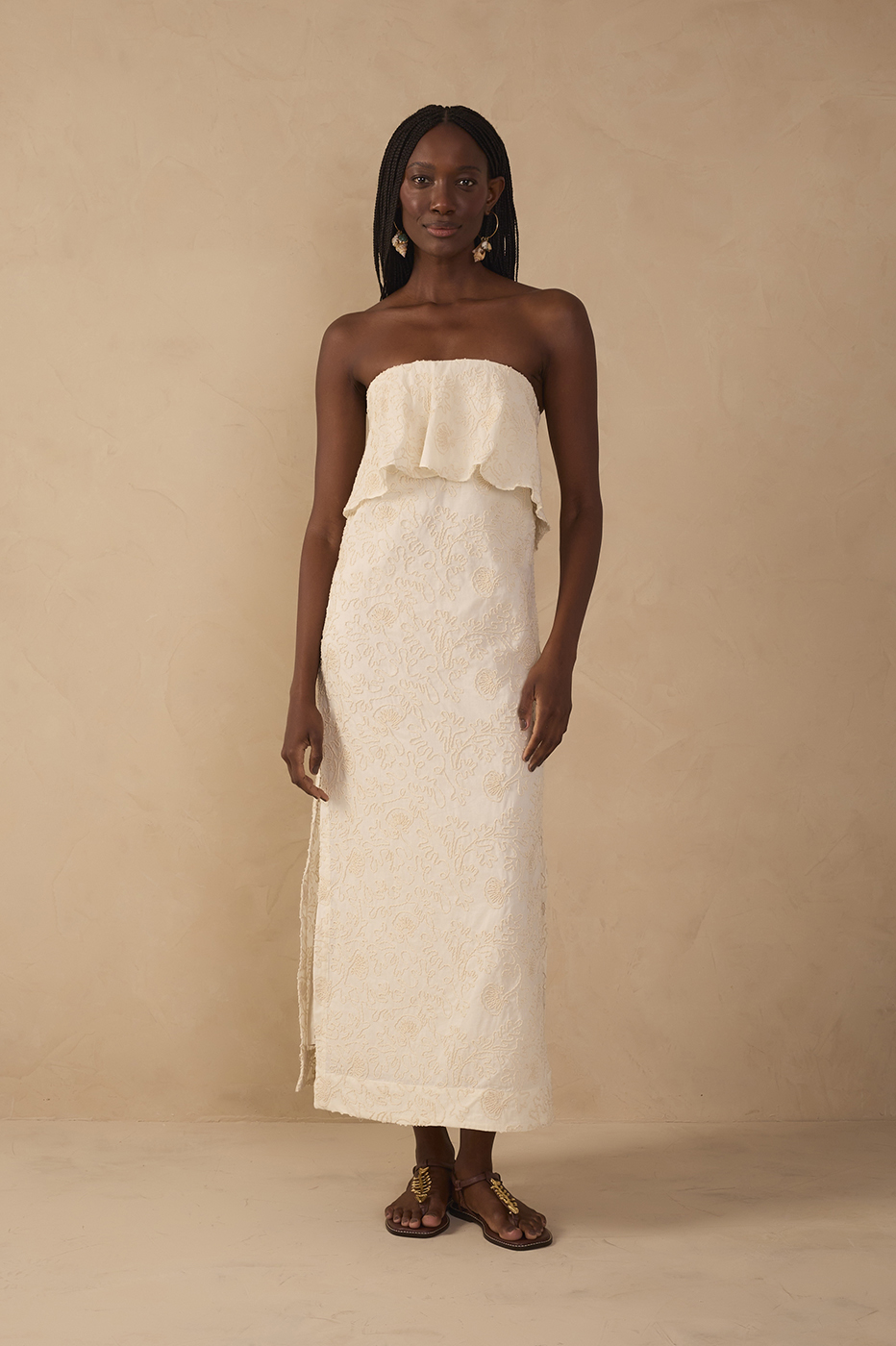
How to Wear White in Fall
The “no white after Labor Day” myth exists because people assume white looks out of place against fall’s darker palette. The opposite is true. White against fall’s rich tones creates stunning contrast. A cream sweater with burgundy pants. An off-white maxi dress with a camel coat and brown boots. An ivory blouse with olive wide-leg trousers. White becomes the light point in a warm, dark palette, and the effect is more sophisticated than any all-dark outfit.
The key to wearing white in fall is grounding it with warm, rich accessories and layers. Gold jewelry, brown leather, warm-toned boots, and structured bags in camel or chocolate prevent white from feeling “too summer” and anchor it firmly in the autumn palette.
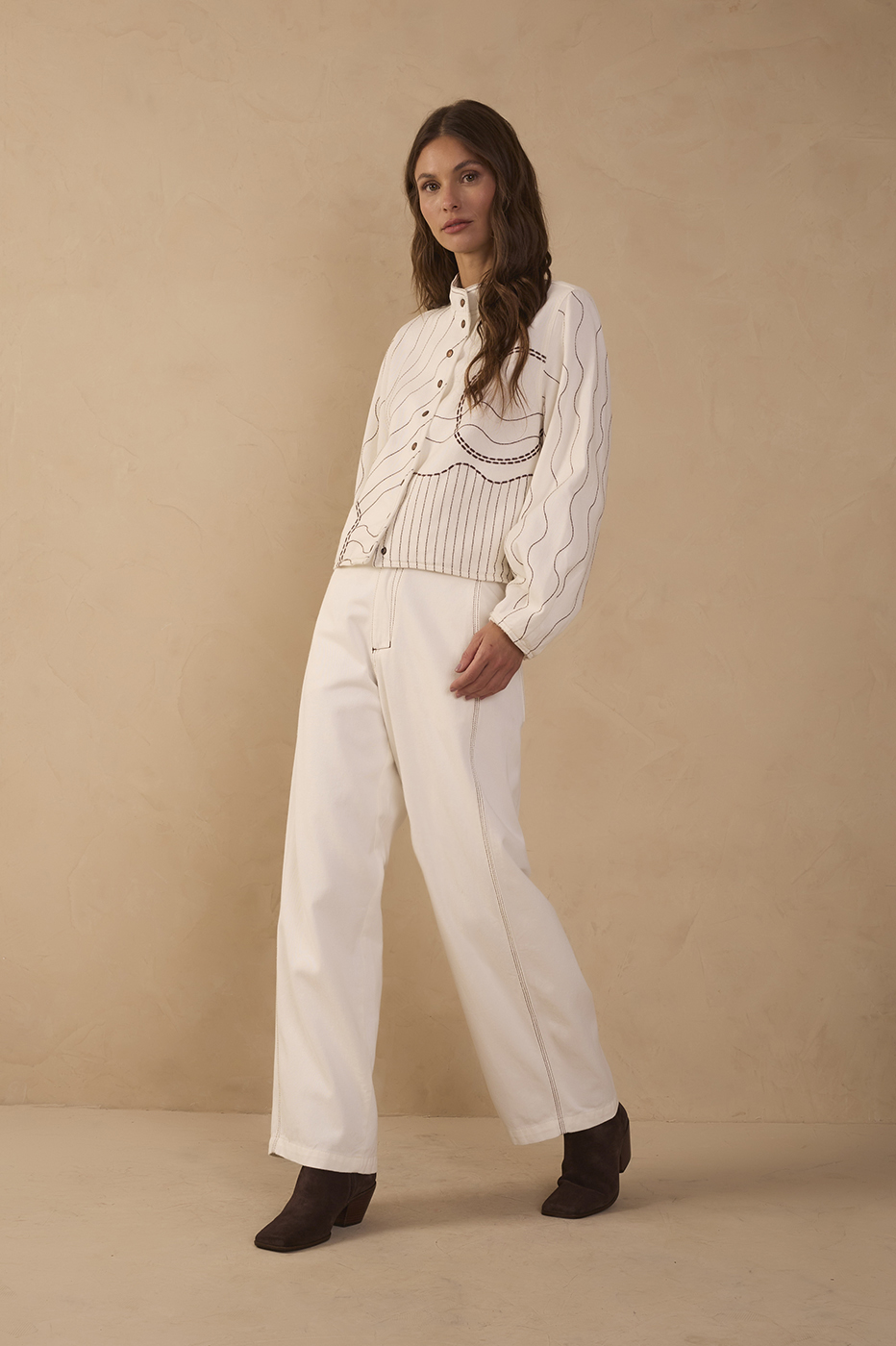
How to Wear White in Winter
Winter white is one of the most powerful style moves you can make. While the rest of the world defaults to black, gray, and navy, a woman in a white wool coat, a cream cashmere sweater, or an ivory knit dress stands out immediately. It is unexpected, which is what makes it impactful. The trick is choosing heavy, luxurious fabrics: wool, cashmere, thick cotton, and heavy-gauge knits. These textures signal winter in a way that overrides the “white is for summer” assumption.

The White Dress Specifically
A white dress is the most versatile single piece you can own. In summer, with flat sandals and shell jewelry, it is a beach-to-dinner piece. In fall, with boots and a structured jacket, it is a polished layering base. In winter, with tights, a long coat, and gold accessories, it is an unexpected statement. The dress stays the same across all three versions. Everything around it changes.
The best white dresses for year-round wear are made from fabrics with enough weight and texture to avoid looking like a nightgown. Linen, heavy cotton, crepe, and structured viscose all work. Sheer, thin, or overly delicate fabrics read as warm-weather only and limit the dress’s lifespan. If you can see through it without a liner, it is a summer-only piece. If the fabric has body, weight, and texture, it works in every month.

The Shades of White: Off-White, Cream, Ivory, and Bright White
Not all whites are the same, and choosing the right shade matters more than most people realize. Bright, optical white is the hardest to wear because it shows every mark and can wash out lighter skin tones. Off-white has a warm undertone that softens the effect and works on virtually every complexion. Cream has a yellow warmth that reads as vintage and relaxed. Ivory sits between white and cream with a subtle richness that photographs as elegant in every setting.
At Dress To, most white pieces are designed in off-white or cream specifically because these shades are more wearable, more forgiving, and more beautiful against a wider range of skin tones than pure optical white. They also pair more naturally with gold jewelry and warm-toned accessories, which is the color story of every collection.
THE RULE IS DEAD
You can wear white in January. You can wear white in October. You can wear white to a funeral if the culture allows it. You can wear white to a dinner party in November. The only rule that survives is: do not wear white to someone else’s wedding. Every other white rule died with the 20th century. Wear what makes you feel beautiful, in whatever color that happens to be, in whatever month you happen to be standing in. Fashion rules are guidelines at best. Your confidence is the only dress code that matters.
Q: Can you wear white after Labor Day?
A: Yes. The “no white after Labor Day” rule originated in the late 1800s as a way for upper-class Americans to distinguish themselves from newcomers to high society. It has no basis in fashion, design, or practicality. White, off-white, cream, and ivory are year-round neutrals that work in every season with the right fabric and accessories.
Q: What shade of white is most flattering?
A: Off-white and cream are the most universally flattering shades because they have warm undertones that complement a wider range of skin tones. Bright optical white can wash out lighter complexions and create harsh contrast with darker complexions. If you are unsure, hold both shades near your face in natural light and see which one makes your skin glow rather than flatten.
Q: How do you keep white clothes clean?
A: Treat stains immediately with cold water and gentle soap. Wash whites separately in cold or warm water with a mild detergent. Avoid bleach on natural fabrics like linen and cotton, as it weakens the fibers over time. Hang dry in sunlight when possible, as UV light is a natural whitening agent. And accept that natural fabrics develop a soft patina over time that reads as character, not neglect.
Here it's always sunny!



Comments (0)